So, you want to scale your online store and get more eyes on your products? Whether you’re building a personal brand or an e-commerce empire, getting seen by your target audience means more visitors, more clicks, and more success. Let me show you the simple way to do it, step-by-step.
1. Combine Intent with Discovery
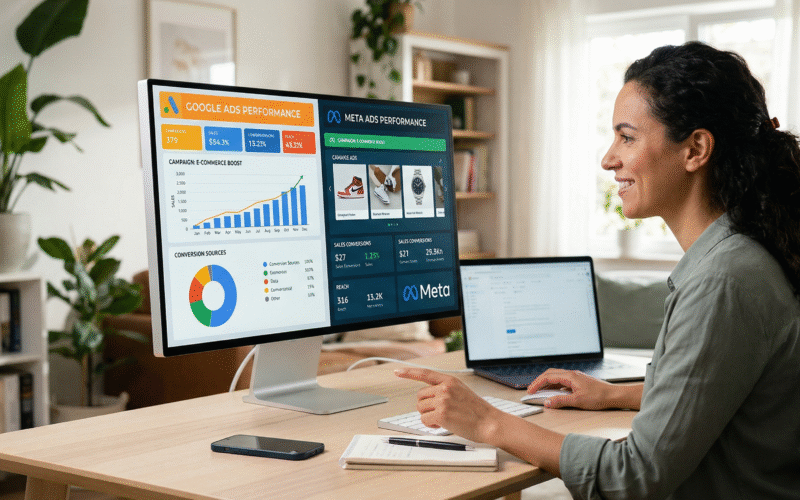
The first step is choosing an ad strategy that fits your niche. For e-commerce, this means combining the search intent of Google with the visual discovery of Meta (Facebook and Instagram).
Google Ads: Capturing Active Shoppers
Google is where people go when they know what they want. If someone types “buy waterproof hiking boots,” they are ready to purchase. By running Google Search and Shopping ads, you put your products right at the top of the search results for those high-intent buyers.
Meta Ads: Building Brand Awareness
Meta is where people go to scroll, not necessarily to shop. However, highly targeted video or image ads can interrupt their feed and introduce them to a product they didn’t know they needed. Meta is perfect for top-of-funnel discovery and bottom-of-funnel retargeting.
2. Do Keyword Research for Google Ads
You need to find the right keywords to use in your campaigns. A keyword is the exact phrase people search.
Use these tools:
- Google Keyword Planner
- Ubersuggest
- Ahrefs (if you have budget)
Instead of bidding on highly competitive single words, try to choose long-tail keywords (3 or more words) that are easy to rank and convert.
3. Write High-Quality, Helpful Ad Copy
This is the most important part. Your ad copy and landing pages should:
- Answer the reader’s question
- Give step-by-step help
- Use examples and real tips
- Be easy to read (use short paragraphs and simple words)
If you want your ads to convert, use your own voice. Keep it real and helpful. People love content that feels human, not robotic.
4. Optimize Your E-Commerce Landing Pages
Once someone clicks your ad, your website needs to close the deal. Google loves well-organized content.
- Use Headings: Use
<h1>for the main title. Use<h2>for main sections. Use<h3>for subpoints. This helps readers and Google understand your content better. - Use Images with Alt Text: Add images to break up your text and keep readers engaged. Make sure to include alt text describing the image using your keyword when possible.
- Add Links: Link to your own pages (internal links) and to helpful sources (external links). This gives your readers more value.
5. Promote Your Store Beyond Ads
Don’t just rely on paid traffic! After publishing new products or blog posts, share your content on:
- Facebook groups
- Reddit (in relevant communities)
- Twitter, Instagram, Pinterest
- Your email list
Final Thoughts
Driving traffic and sales isn’t magic. It’s strategy. Use the right keywords, organize your content, be helpful, and keep learning. Google rewards content that helps people.
If you stay consistent and follow this guide, your posts will start ranking—and traffic will follow. Keep grinding!. Contact us!