Are you wondering if doing digital marketing for a short time or a long time is better? It is a very common question for beginners. Whether you are building a personal brand or selling a product, getting more visitors and clicks is the goal.
Let me show you the simple differences between the two, step-by-step, so you can make the right choice.
What is Short-Term Digital Marketing?
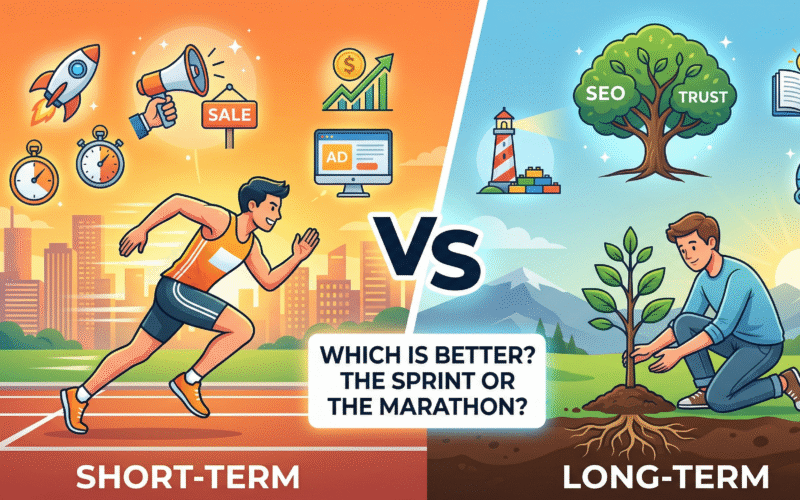
Short-term digital marketing is all about getting fast results. Think of it like a sprint. You put money or effort in, and you see visitors almost immediately.
Examples of Short-Term Strategies
- Running Facebook or Instagram ads
- Paying for Google Search ads
- Running a one-week holiday sale
The best part about short-term marketing is the speed. It is great if you need sales today. The downside? The moment you stop paying for those ads, the traffic stops completely.
What is Long-Term Digital Marketing?
Long-term digital marketing is about building a solid foundation. Think of it like planting a tree. It takes a few months to grow, but eventually, it brings you results without you having to pay for every single click.
Examples of Long-Term Strategies
- Writing helpful blog posts that rank on Google
- Building an email list
- Growing a loyal community on social media
The biggest benefit here is lasting success. Google rewards content that helps people. The catch is that it takes patience. You won’t see massive results on day one, but it pays off hugely over the years.
Which One Should You Choose?
So, which is better? Writing blog posts and doing long-term digital marketing isn’t magic. It’s strategy. If you want a business that survives for years, long-term digital marketing is the winner.
However, the absolute best strategy is to use both! You can run a few short-term ads to get your first customers today, while you build your long-term SEO so you can get free visitors tomorrow.
Whether you are building a big brand or just starting out, always focus on giving value. If you stay consistent, your posts will start ranking—and traffic will follow. Visit