The real estate industry is undergoing a profound transformation. The days of relying solely on newspaper ads, open house signs, and word-of-mouth are rapidly fading. Today, the journey to buying or selling a property almost always begins online. This digital shift has made digital marketing not just an option, but an absolute necessity for real estate professionals who want to thrive in a competitive market.
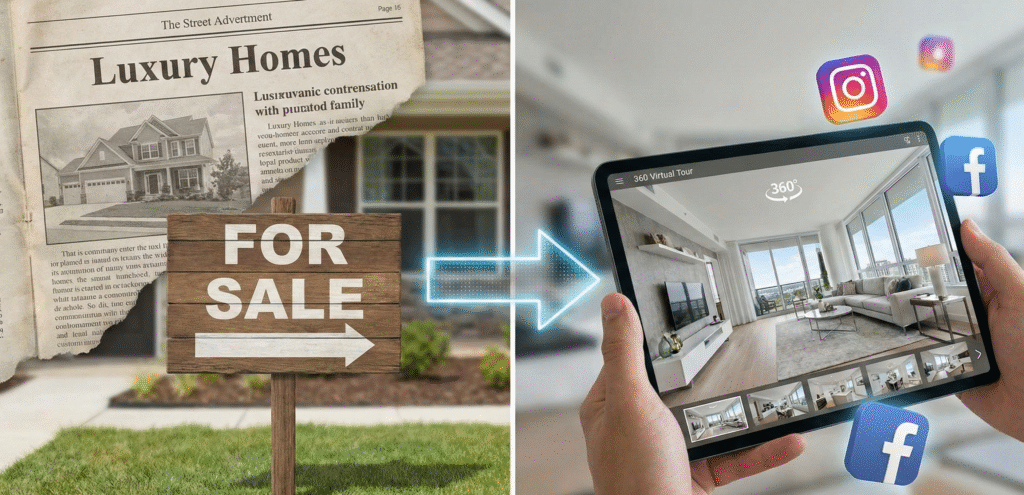
Digital marketing provides a suite of powerful tools that allow agents and brokers to reach more people, target the right audience, and showcase properties in ways that were previously unimaginable. Let’s explore the key ways digital marketing is reshaping the real estate landscape.
1. Unparalleled Reach and Targeted Marketing
One of the most significant advantages of digital marketing is the ability to cast a wider net while simultaneously being more precise with your targeting. Unlike a billboard that is seen by everyone who drives by, digital ads on platforms like Google and Facebook can be shown specifically to people who are actively searching for properties in a certain area, within a specific price range, or who match a particular demographic profile.This means your marketing budget is spent more efficiently, as you are only paying to reach people who are genuine prospects. Furthermore, the internet has no geographical boundaries, allowing you to showcase your listings to potential buyers not just in your local area, but across the country and even the world.
2. Showcasing Properties with Immersive Visuals
In real estate, visuals are everything. High-quality photos have always been important, but digital marketing has taken this to a new level. Through technologies like 3D virtual tours, drone footage, and high-definition video walkthroughs, potential buyers can get a realistic feel for a property without ever stepping foot inside.These immersive experiences not only attract more attention to your listings but also pre-qualify buyers. By the time someone schedules an in-person viewing, they already have a good sense of the property, saving time for both the agent and the client.
3. Building Trust and Authority
In a high-stakes industry like real estate, trust is paramount. Digital marketing provides numerous channels to build credibility and establish yourself as an authority in your market. A professional, user-friendly website is your digital storefront, and a regularly updated blog with valuable content (e.g., market reports, neighborhood guides, home-buying tips) demonstrates your expertise.
Social media platforms allow you to engage directly with your community, share success stories through client testimonials, and showcase your personality. Consistent, valuable online interactions foster trust and make potential clients more likely to choose you when they are ready to buy or sell.
4. Data-Driven Decisions and Cost-Efficiency
One of the biggest advantages of digital marketing over traditional methods is the ability to track and measure performance in real-time. Analytics tools provide deep insights into how your campaigns are performing. You can see exactly how many people viewed a listing, clicked on an ad, or filled out a contact form.
This data allows you to make informed, data-driven decisions. You can identify what’s working and what’s not, allowing you to optimize your strategies on the fly and allocate your budget to the most effective channels. This level of insight and control makes digital marketing a highly cost-effective solution for real estate businesses of all sizes.
By the Numbers: The Power of Digital in Real Estate
The impact of digital marketing in real estate is backed by compelling statistics:
Over 90% of home buyers use the internet to search for homes. (National Association of Realtors)
Real estate listings with video receive 403% more inquiries than those without.
Homes with professional photos sell 32% faster than those without.
79% of homebuyers use social media to search for homes.
These numbers paint a clear picture: a strong digital presence is no longer optional; it’s a critical component of success in the modern real estate market.
Conclusion
Digital marketing has fundamentally changed the way real estate works. It’s not about replacing the human element of the business – relationships are still at the core of every successful transaction – but about enhancing it with powerful tools. By embracing digital strategies, real estate professionals can reach a wider audience, showcase properties more effectively, build deeper trust, and ultimately, close more deals. The future of real estate belongs to those who can successfully integrate these digital tools into their business model.
For enquiries visit